
My Approach To Therapy
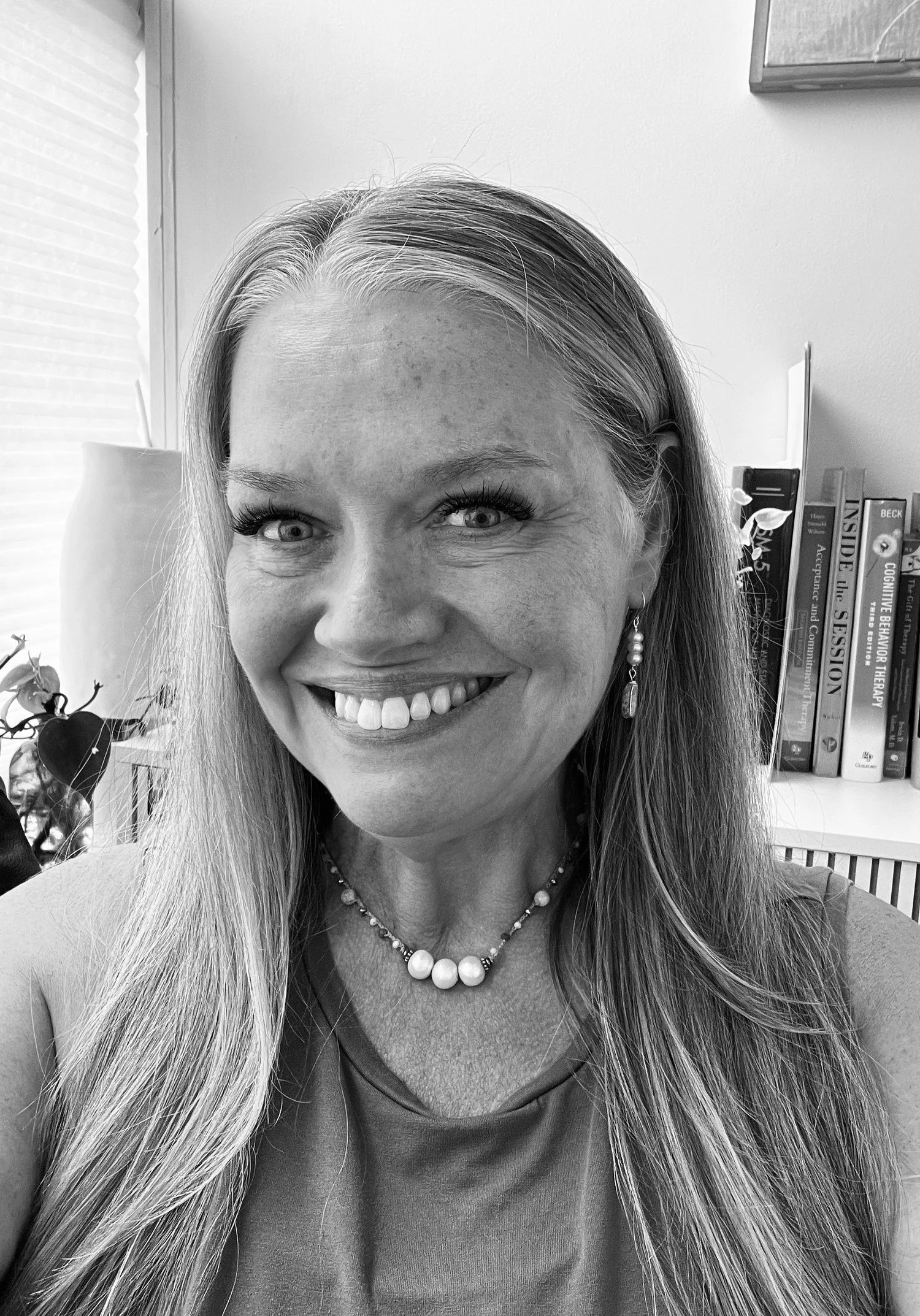
My “How”
We all feel lost sometimes, whether within ourselves or our relationships. An insightful therapist can help you find your way home to what feels true and whole ... to you.
I meet you where you are at with authenticity, real talk, and a genuine interest in understanding you and your lived experiences to help you find your way back home.
How I Do Therapy
Healing begins in relationship.
That is not just a nice idea. It is one of the clearest findings in the research and the truest thing I know from the room: the connection between therapist and client matters. You deserve someone who is actually with you — paying attention, telling the truth, and willing to know you beyond a diagnosis, a role, or a protocol.
That is where I put my energy.
I am anything but a “how does that make you feel?” therapist. We will talk about feelings, of course. But we will also talk about what happened, what you learned to do to survive it, what those patterns are costing you now, and what becomes possible when you no longer have to organize your life around them.
My own life has shaped how I show up: with warmth, directness, and deep respect for your story. My clinical training includes CBT, DBT, ACT, Behavioral Activation, and ERP, grounded in deeper psychodynamic, psychoanalytic, and existential work, with specialized certifications in trauma and anxiety. But I do not believe in one-size-fits-all therapy. The best therapy is the therapy that helps you understand yourself, feel less alone in your own life, and begin to change what is ready to change.
Healing does not always fit neatly into a 50-minute box. I offer 1-, 2-, and 3-hour sessions depending on what you need, what we are working on, and where you are in the process.
You do not have to be “sick” to deserve support. Sometimes pain is not a disorder. Sometimes it is a signal that something in your life, your body, your relationships, or your sense of self needs attention.
Whether you are carrying a diagnosis, moving through grief, trying to understand old patterns, or feeling lost inside roles that no longer fit, you are welcome here.
You do not have to know where to begin. That is part of the work.
When you are ready, reach out for a free consultation. There is no wrong way to start.
If Success Is Costing Too Much
You’ve worked hard to get here. A career. A business. A family. A reputation for competence. Maybe all of it at once.
From the outside, it may look like success. But inside, you might feel tired in a way rest does not fix — like some essential part of you got left behind.
I understand that territory because I’ve lived it.
Before becoming a psychotherapist, I was an attorney and business owner — driven, ambitious, always pushing forward — while raising a family in the middle of it all. I know what it is to perform, to lead, to succeed, and still feel like the real you is waiting underneath, unseen.
Here is the thing about high achievement: the patterns that built your success were usually built long before the success arrived.
Responsibility. Perfectionism. Over-functioning. Reading the room. Staying useful. Needing very little. Becoming excellent because excellence once felt safer than being ordinary.
Those patterns may have helped you survive. They may have helped you build a life. And now they may be costing more than they protect.
Therapy with me is a place to finally exhale. You do not have to be impressive here. You do not need a polished explanation for why you are exhausted.
Together, we look at what your patterns protected, what they built, and what they are asking from you now.
This is not about fixing what is broken. It is about reconnecting with what is real. With what is you.
You do not have to abandon the life you built to come back to yourself. And you do not have to keep living as if achievement is the only way to be safe.
If Trauma Has Left You Feeling Disoriented
Trauma can make your own life feel unfamiliar from the inside.
You may be functioning — working, parenting, showing up, answering messages, doing all the things — while part of you stays on alert, shut down, numb, overwhelmed, or unsure why the past still has so much authority over the present.
You do not have to carry that alone.
This work is personal to me, and it is also clinical. My own life has shaped the way I sit with trauma: with steadiness, honesty, care, and deep respect for what people had to do to survive. My training includes advanced education in trauma treatment and certification as a trauma professional. But I will never treat your trauma as a protocol to run you through.
It happened to a whole person. That is who I will be sitting with.
In our sessions, we move at a pace your system can actually tolerate. We pay attention to what your body learned, what your mind organized itself around, what relationships taught you to expect, and what parts of you had to go quiet in order to keep going.
You are welcome to bring the parts of your story that feel painful, confusing, hidden, unfinished, or hard to say out loud. You do not have to make it neat first. You do not have to prove it was bad enough. You do not have to perform being okay.
Trauma may have shaped part of your path. It does not have to be the only thing that shapes what comes next.
Together, we work toward safety, language, connection, and a steadier relationship with yourself. Not all at once. Not on a forced timeline. At the pace the work allows.
You're not alone anymore. I see you, and I'm here—whenever you’re ready.